SECTION 2 : Actuator & Control Systems Terms & Definitions
A
B
C
D
E
F
G
H
I
J
K
L
M
N
O
P
Q
R
S
T
U
V
W
X
Y
Z
A
Electricity which periodically reverses direction. Unit of measurement **Hz. (cycles per second)**.
A vessel in which a **gas is enclosed and compressed by the liquid** in a hydraulic system, thus **storing energy** to supply liquid under pressure to the system when needed. Types available are **bladder, piston and diaphragm**.
A device attached to a valve to provide the operation. Motion energy can be **pneumatic, hydraulic, electric or manual or a combination**. Types include: Spring Return, Double Acting, Direct Gas, Gas/Hydraulic, Positioning/Modulating. All the above can be fitted to **quarter turn or linear acting valves**.
A term used to describe the **interface between the valve and the valve actuator** when the actuator device **cannot be directly bolted** to the valve top-work flange. Can be a simple plate or a fabricated pedestal.
A container (vessel) in which **gas is stored under pressure** as a source of pneumatic fluid power.
Representation by means of a **continuously variable physical quantity**. Typical analogue control or measured variable signal is **4...20mA**.
The name given to the framework for controlling **explosive atmospheres** and the standards of equipment and protective systems used in them. It is based on the requirements of **European Directives 99/92/EC and 94/9/EC**.
B
A separating device to **insulate or isolate electrical circuits**. Also the separating device in gas/hydraulic systems.
A highly visible device to show **open/closed valve status**, usually incorporates **limit switches**.
The dimension of a circle of tapped or through holes on a valve top flange or actuator mounting plate for **securing the two devices**.
A device to **increase air pressure and volume**, usually between a low volume pilot supply and a large actuator cylinder.
Permits **air movement between atmosphere and the component** in which it is fitted.
C
A chain operated wheel attached to a manual actuator with a closed loop of chain to enable the **operation of an overhead valve**.
Insulated wire is wound onto a spool through which **electric current is passed to create a magnetic field**. See **Solenoid**.
A device which converts **mechanical power or force to pneumatic fluid power**.
The time to actuate a valve from **open to close**. Time normally specified by the required process conditions and can be adjustable.
The motive force for a pneumatic or hydraulic actuator is generated by a **plunger or piston being pressurized** inside a cylindrical housing.
D
A **single-cable link** which provides **communication between control stations** which are physically separated.
The amount of power supply (or signal range) of an actuator can be varied **without initiating valve obturator motion**. The technical term for deadband is **hysteresis**.
A spring-return device which **maintains the position of the spool** of a directional control valve in position.
Data represented by a **series of digits**. Many functions/values can be transmitted over a single pair of cables.
Electricity which **flows in one direction** as produced by a battery.
The amount of fluid transferred during a **single operation of an actuator cylinder**.
Central process control system distributed among **two or more process control units** coupled by a **high speed communications network**. Remote field devices (actuators) are connected to one of the process control units.
An actuator which **requires power in both operating directions** (i.e. no spring).
E
An electromechanical device that uses an **electric motor to drive through a gearbox** to an output shaft which is connected to a valve stem.
A hydraulic actuator powered from an **integrally mounted hydraulic power unit** requiring only an **electrical supply and control signal**.
The ability of an equipment or system to function satisfactorily in an electromagnetic environment **without introducing intolerable electromagnetic disturbances** (IEC definition).
The actuation of a valve by **electric motor**.
Housings for control equipment to provide **protection appropriate to the environment**. Designed to meet the requirements of **I.E.C. and/or N.E.M.A.**.
Mechanical device to **limit the open and closed position** of the actuator.
Surface treatment of metal to **protect against corrosion**.
F
A term used to describe the desired **failure position of a control valve**: **fail-closed, fail-open, or fail-in-place**. Fail-in-place usually requires the use of a **lock-up valve** with a spring-return actuator.
The process of **transferring data from the output of a system to the input** typically for **valve position monitoring**.
A **digital, serial, two-way communications system** that interconnects measurement and control devices (sensors, actuators, controllers). Allows for **calibration, diagnostics and decentralised control**.
A device incorporated into a system to **remove contaminants from the fluid**.
See **Speed Control Valve**.
A procedure for hydraulic systems of cleaning the fluid to a predetermined standard. **NAS (National Aeronautical Standard) 1638** is typically used, with **NAS 6** being the most common requirement.
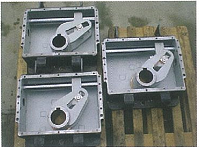
The centre enclosure of the actuator housing the **Scotch Yoke Mechanism**.
A liquid filled glass device for **detecting high temperature**. At a predetermined temperature the bulb **fractures** causing the control valve to change state and signal the actuator to close the valve.
See **Frangible Bulb**.
G
For pipelines where **high pressure gas is used to displace hydraulic fluid** into the actuator.
H
In electric actuators, it is a **lost motion mechanism** to allow a motor to reach full speed before engaging the gear drive. Provides a higher efficiency for overcoming valve **break torque**.
See **Override**.
The **manual effort (force)** required on the rim of a handwheel to open or close the valve. Normally expressed in **Newton ($N$)**.
A **bi-directional industrial field communication protocol** used to communicate between intelligent field instruments and host systems.
Locations where hazardous materials will require electrical equipment to have **special protection to prevent causing an explosion**.
The **vertical distance between two levels** in a liquid (related to pressure).
Cylindrical in form with the teeth having a constant section and cut along a **helix** on the pitch diameter.
Constructed such that there is **zero ingress** against entry of air or other gasses, **moisture or dust**.
A device that converts **hydraulic pressure into motion** via a pressurized piston within a cylinder. This linear movement is converted into rotary movement for quarter turn valves by a **scotch yoke mechanism**.
A device by which **rotation of an hydraulically powered motor is converted into mechanical motion**.
A device to **create kinetic energy within a hydraulic system**. Usually comprises a motor, a storage tank, filters, regulators, directional valves, gauges etc. to power one or multiple valve actuators.
I
A device which converts **low pressure fluid power into a higher pressure**. See **Booster**.
A mechanism which **prevents the operation of a device** until **certain conditions have been satisfied**. Normally electrical or mechanical safety devices.
A circuit in which any thermal effect or spark is **not capable of causing ignition of flammable gas or material**.
A device which converts **DC voltage to AC voltage**.
The **degree of protection an enclosure provides** against the ingress of solids and water.
**Instrument Society of America** (now ISA - International Society of Automation).
J
A function that provides **momentary operation of an actuator** to achieve a **small movement** of the valve.
K
An epoxy-based **intumescent coating** to provide **fire protection**. Works by **endothermic reaction** rather than insulation.
L
Switches which are actuated at preset values by the movement of the valve. Normally **fully open or closed positions**, but can be set at intermediate points. Types include **mechanical, magnetic (reed) and proximity**.
A system incorporating a pressure transmitter to sense the **rate of pressure drop in a pipeline**. When the rate of pressure drop falls outside a preset value, the control system will **close the valve**. Can be electrical or mechanical.
A device that develops **force and motion** (e.g., stem movement), from an available energy source, **in a linear manner**, as opposed to rotationally like an electric motor.
A device that **adds controlled amounts of lubricant** to a fluid power system.
A device used in modulating service to provide **position feedback of the valve position**. Provides an **electrical output proportional to valve position**.
M
See **Override**.
A published torque value of the **maximum torque that may be applied to a valve stem** before **permanent deformation** may occur. The actuator maximum torque must not exceed this figure.
A term for describing the method of **controlling flow through a valve by varying the pressure drop** across it, allowing for intermediate positioning.
A device which converts **electric, pneumatic or fluid power into mechanical force and motion**, normally a rotating shaft output.
N
An American consensus standard for the **installation of electrical systems (National Electrical Code)**.
**National Pipe Thread Standard** for **tapered threads** - American.
O
A **manual mechanical or hydraulic device** fitted to an actuator for **operating the valve when the normal motive power is not available**.
P
An actuator which delivers torque for **rotation of less than one revolution** to the valve. Typically used for **ball, butterfly and plug valves**.
A manual or automatic procedure to **partially close a valve to prove operation integrity** without affecting the process.
The European Directive **97/23/EC** for pressure equipment. All items placed on the market after May 2002 must comply and carry the **CE marking**.
The **alternate on-off periods of operation** of an actuator (electric) as specified in the rating.
The device which prevents operation of an electric actuator motor if the **3 phases are not connected in the correct rotation**.
A device in which **energy from a control system is amplified by energy from another source** to power the actuator.
The device used for **converting fluid power to mechanical energy** within a cylinder.
An electrical term which **determines the direction of current flow** in an electrical circuit.
A device for giving a **continuous electrical output of valve position**. Can be **analogue or digital** format.
Using the actuator to **modulate the valve** (set it to an intermediate position).
A device which receives a pneumatic or electrical **command signal**, **compares it to the actual valve stem position**, and converts the difference into a signal to the actuator to **adjust the valve position**.
Its operation uses a **voltage gradient** across a resistive element which has a variable pick-off point connected to the valve stem. Stem movement changes the voltage to provide an **electrical output of the valve position**.
The device which **provides power** to a control system or component.
A definition of the **rules by which master and slave units communicate** with each other.
A device that **detects the presence of a target** by it disturbing the associated magnetic field. Used as a limit switch and suitable for **intrinsically safe circuits**.
Q
A **one-way valve** connected directly to the actuator cylinder with a **large exhaust port** to allow **fast dumping of air** from the cylinder (to speed up operation).
R
The **probability that a device will operate correctly** over a specified period or amount of usage.
The **closeness of the band of measurements** of repeated measurements of the same variable under the same operating conditions.
In hydraulic systems, it is the **storage tank for unpressurised fluid** from which the pump draws its supply. It is also the vessel to which the **return lines are connected**.
The time between an **instruction to proceed with an action** to the **completion of the task**.
S
Is a factor applied to the nominal operating torque or thrust given by the valve manufacturer. Can be **between 1.2 and 2.0** depending on application (provides a power margin).
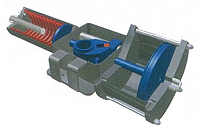
The mechanism within a quarter turn actuator for **converting linear movement to 90 deg rotary output**. Several yoke configurations (cants) allow selection of the actuator output torque to best suit the valve torque characteristic.
The process of **operating a new spring several times prior to installation** into a spring can. Assures optimum spring performance from first operation of the actuator.
Handwheel operators and electric actuators can be **side mounted on a valve** and driven through a **bevel gearbox** to allow **easier operator access**.
A device to **reduce the gas flow noise** by tuned resonant control of gas expansion.
Passive or defined **low energy devices** generating less than **1.5V, 100mA, 25mW**.
See **Spring-Return Actuator**.
The pressure stated as the fluid pressure available to **size the actuator** to operate the valve.
An actuator or positioner which includes a **microprocessor** for communicating with a central control system and to **make local control decisions**, distributing part of the control function normally performed in the central DCS.
A device that turns an **electrical signal sent to a coil into a mechanical movement** inside the valve, thus allowing it to control the flow of liquid and gases. Often used in the control piping of powered hydraulic or pneumatic cylinder operators.
A 2-port valve (usually a **needle valve**) for **restricting the flow into or out of an actuator** to **adjust the operating time**.
The **welded enclosure** containing the **compressed spring** (in spring-return actuators).
An actuator which **requires power in one direction** with a **spring operating in the other direction** (to fail to a safe position). See **Actuator**.
A combination of **friction and adhesion (sticking)** that must be **overcome to move a device from rest**.
T
A **force transmitted by an actuator to a valve** through the valve stem expressed in **Newton ($N$)** or **Pounds ($lbs$)**.
* **STO (Start-To-Open):** Thrust required to **start movement** from closed.
* **ETO (End-To-Open):** Thrust required to **fully open** the valve.
* **STC (Start-To-Close):** Thrust required to **start movement** from open.
* **ETC (End-To-Close):** Thrust required to **fully close** the valve.
**Note:** Always check whether the valve is standard acting or reverse acting.
* **BTO (Break-To-Open):** Torque required to **start movement** from closed.
* **RTO (Run-To-Open):** Torque required for **travel** in the opening direction.
* **ETO (End-To-Open):** Torque required to **fully open** the valve.
* **BTC (Break-To-Close):** Torque required to **start movement** from open.
* **RTC (Run-To-Close):** Torque required for **travel** in the closing direction.
* **ETC (End-To-Close):** Torque required to **fully close** the valve.
The torque output of an actuator normally expressed in **Nm** or **foot/lbs**.
See **End Stops**.
V
Applied to **high integrity control systems** where a valve closure requires **more than one command signal to operate**. Typically **2 out of 3 (2oo3)** to alleviate a single component failure.